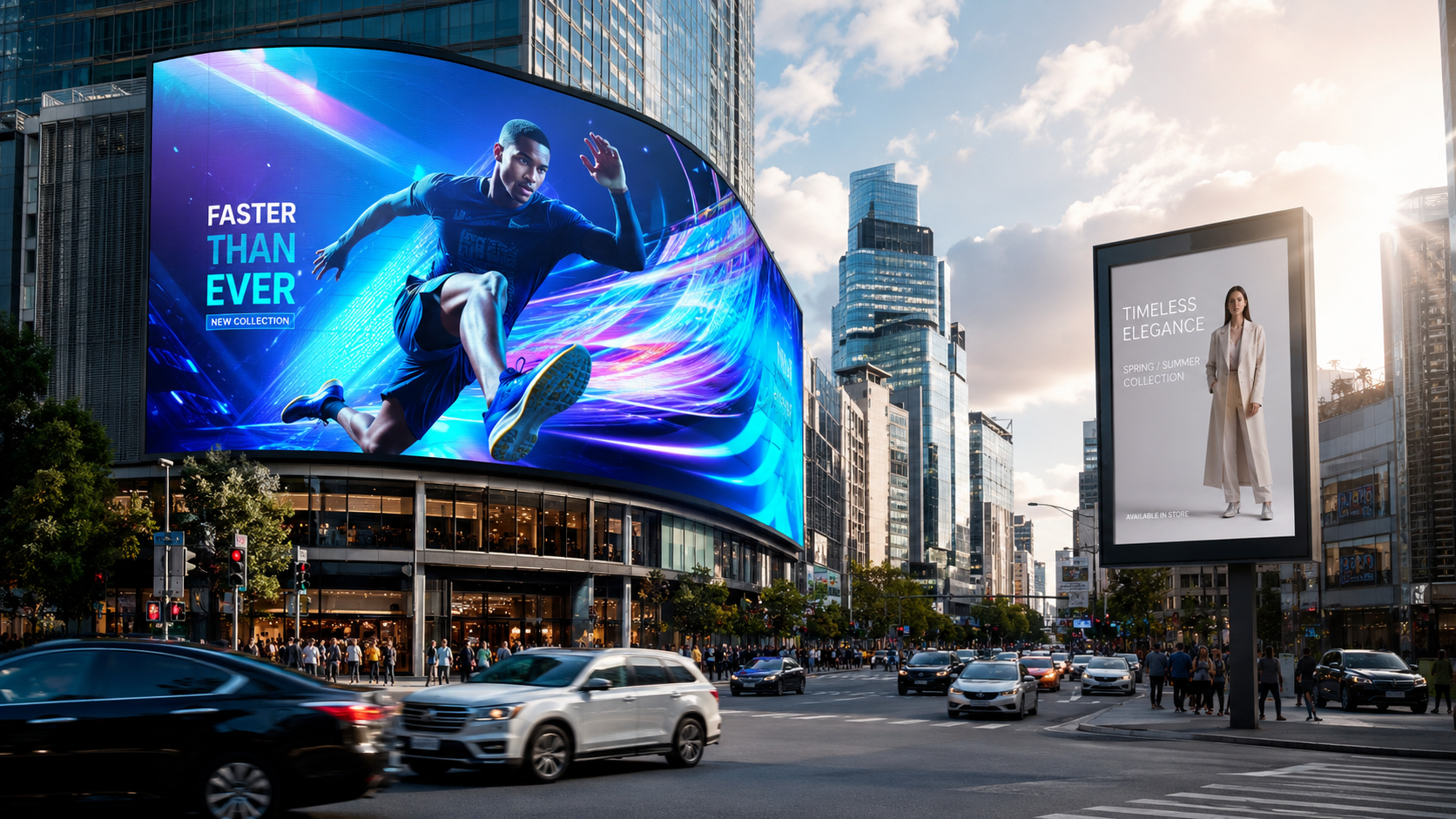
You have secured a high-visibility outdoor location, finalised the advertising plan, and allocated the budget for a digital display installation. Now you are comparing two options — an outdoor LED advertising screen and a digital advertising board. Both can display advertisements, attract attention, and generate revenue. However, the long-term return on investment depends on far more than the initial installation cost.
The difference between an LED advertising screen and a digital advertising board becomes visible in real operating conditions.
This is why the ROI comparison between outdoor LED advertising screens and digital advertising boards should never be based only on hardware pricing. The better investment depends on how the display performs across its full operational life and how effectively it supports advertiser demand in your specific location.
This blog explains the technical and commercial differences between LED advertising screens and digital advertising boards, how each format affects outdoor campaign performance, and which option delivers stronger long-term ROI under different installation conditions.
What’s the Difference Between an LED Advertising Screen and a Digital Advertising Board
The terms “LED advertising screen” and “digital advertising board” are often used interchangeably in the outdoor advertising industry, but technically they are not the same product category.
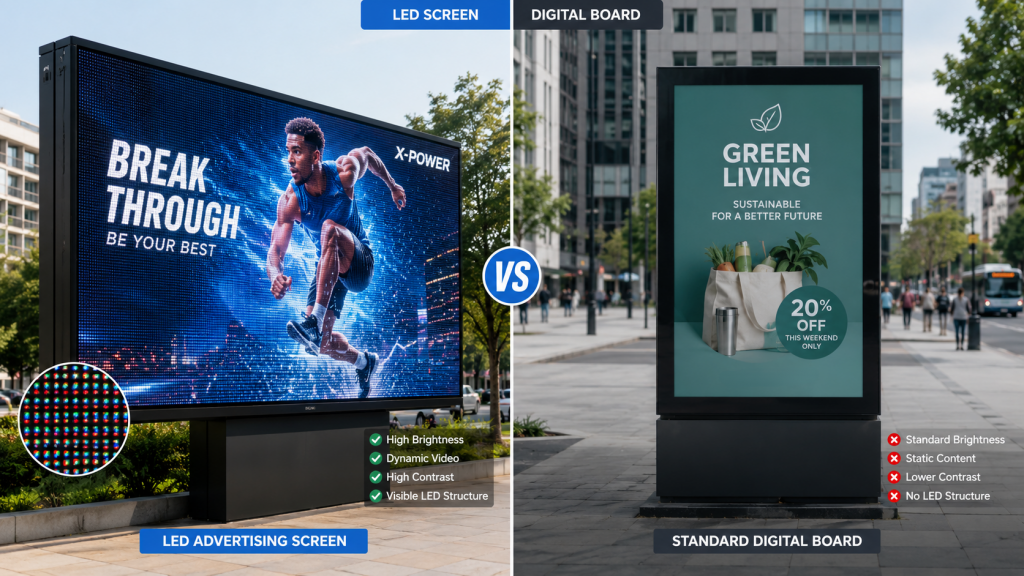
An outdoor LED advertising screen is a direct-view LED display system. It uses individual LED pixel clusters mounted directly onto display modules that generate light output without requiring a backlit panel. This technology allows the screen to deliver high brightness, strong colour accuracy, wider viewing angles, and better visibility under direct sunlight. Outdoor LED advertising screens are designed specifically for dynamic content such as video advertisements, motion graphics, live feeds, animated campaigns, and high-impact DOOH advertising.
A digital advertising board usually refers to either a backlit LCD-based outdoor display or a lower-specification LED display designed mainly for static advertisements, promotional graphics, schedules, or informational content. These systems generally operate with lower brightness output and lower visual performance compared to premium outdoor LED advertising screens.
The difference matters because content quality affects advertiser demand and audience engagement. A display that delivers vibrant, highly visible content throughout the day naturally attracts stronger advertising campaigns than one whose visibility drops significantly under outdoor lighting conditions.
Factors That Determine Which Will Generate Better ROI for Outdoor Advertising
Here are some criteria which determine which is the best for generating better ROI in terms of outdoor advertising.
1. Brightness and Visibility
Brightness is one of the most important performance factors in outdoor digital advertising because it directly influences visibility during peak daylight hours.
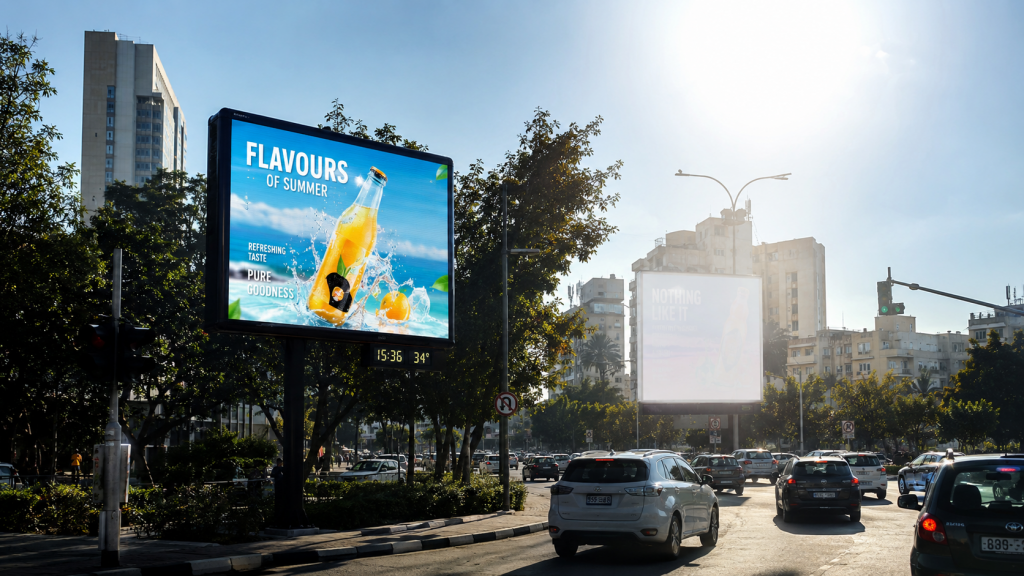
An outdoor LED advertising screen is designed to maintain image clarity even under direct sunlight. Most premium outdoor LED advertising screens operate between 6,000 and 10,000 nits, allowing advertisements to remain clearly visible from morning until evening. Automatic brightness adjustment systems further improve visibility by adapting output according to changing ambient light conditions throughout the day.
A digital advertising board generally operates at lower brightness levels. In direct sunlight, the content may appear washed out, reducing readability and limiting audience engagement during high-traffic daytime periods.
This visibility difference has a direct commercial impact. Advertisers invest in outdoor campaigns to maximise exposure. If the display cannot maintain strong visibility during peak traffic hours, the actual audience delivery becomes lower than expected. Media buyers and advertisers recognise this limitation quickly, which affects CPM rates, campaign retention, and long-term site demand.
2. Content Capability Influences Advertiser Demand
Content capability plays a major role in determining which advertisers are willing to use the display and how much they are prepared to pay for placements.
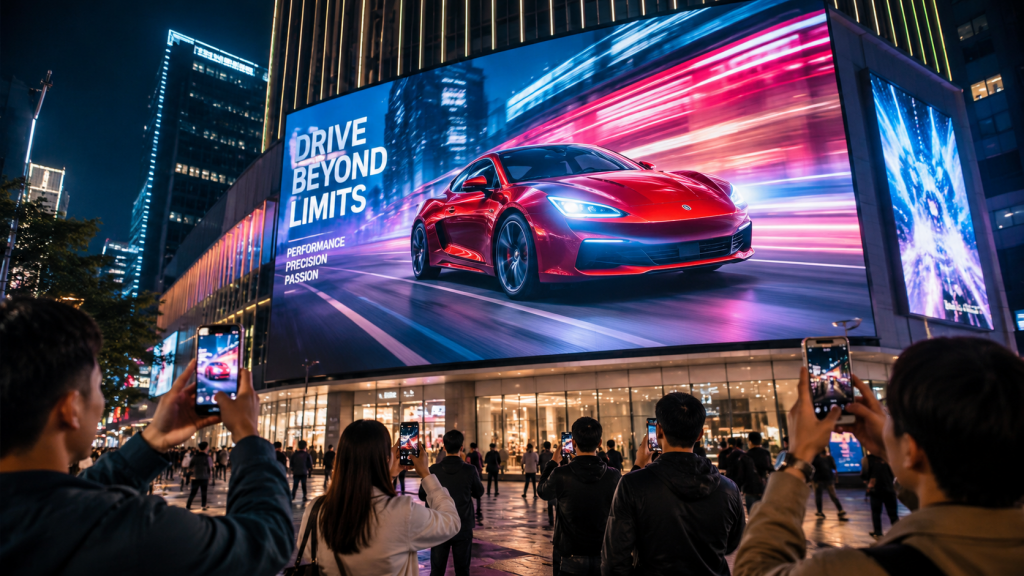
An outdoor LED advertising screen supports high-quality video playback, smooth motion graphics, real-time content updates, and dynamic advertising formats. Modern LED screens also support high refresh rates, which eliminate flickering during smartphone recording and improve visual smoothness for moving content.
These capabilities are important because premium advertisers increasingly demand dynamic DOOH campaigns rather than static visual displays. Automotive brands, FMCG companies, entertainment campaigns, retail launches, and luxury advertisers prefer displays capable of delivering high-impact visual experiences.
A digital advertising board is generally more suitable for simpler content formats such as text-based advertisements, static graphics, pricing displays, schedules, or informational messaging. While this works effectively in many applications, it limits the type of premium advertising inventory the display can support.
3. Total Cost of Ownership
Many buyers compare outdoor LED advertising screens and digital advertising boards based only on installation cost. However, the real ROI calculation depends on total cost of ownership across the display’s operational life.
An outdoor LED advertising screen typically requires higher initial investment, but it also delivers longer operating life, lower visibility-related revenue loss, and stronger advertiser retention. Quality LED screens can operate reliably for 80,000 to 100,000 hours when maintained correctly, making them suitable for long-term commercial use.
Digital advertising boards often appear more economical during procurement, but maintenance requirements, panel degradation, brightness loss, and replacement cycles can increase long-term operational costs significantly.
Modern outdoor LED advertising screens using advanced power management systems consume less energy relative to their brightness output compared to many conventional display systems. Across several years of continuous operation, these energy savings become commercially significant.
A display generating no revenue during repair periods still carries operational expenses such as rent, electricity, financing, and maintenance costs. Higher-quality LED advertising screens with better thermal management and modular maintenance systems generally reduce prolonged downtime risks.
4. Location and Audience Profile
The ideal display format depends heavily on where the display will operate and who the audience is.
High-footfall urban intersections, commercial districts, transport corridors, highways, airports, shopping zones, and premium retail locations usually justify the investment in an outdoor LED advertising screen. These environments support higher CPM rates, stronger advertiser competition, and premium campaign demand, allowing the display owner to recover investment costs more efficiently.
A digital advertising board may still perform effectively in secondary locations where advertiser demand is lower and campaign expectations are simpler. Residential areas, smaller retail zones, educational campuses, or informational display environments may not require the premium visual capability of a large outdoor LED advertising screen.
5. Operational Management Also Impacts ROI
Hardware quality alone does not guarantee strong returns. Operational management plays an equally important role in determining the long-term performance of outdoor digital advertising assets.
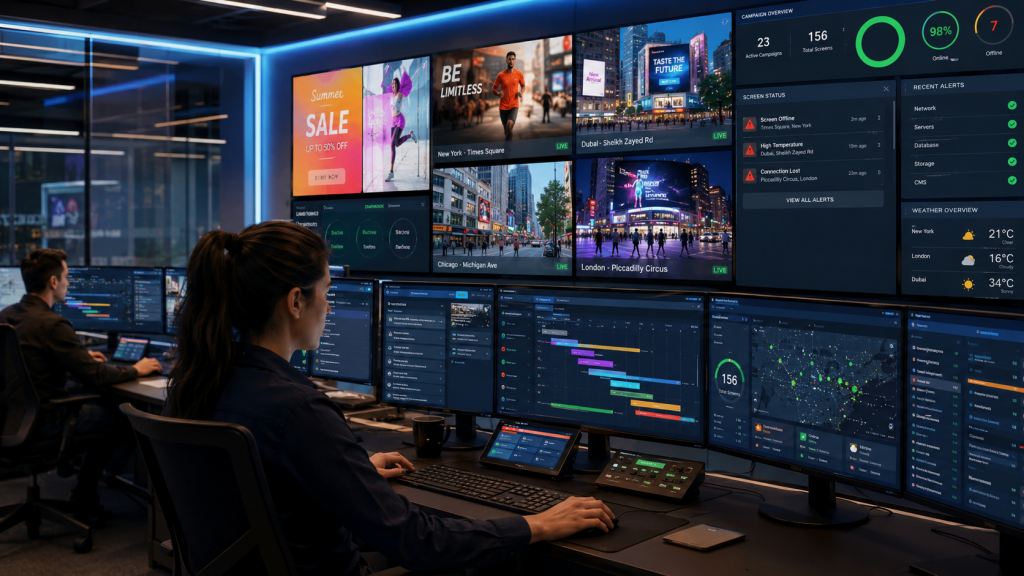
An outdoor LED advertising screen performs best when paired with strong content scheduling, campaign management, preventive maintenance, and active monitoring systems. Dynamic advertising campaigns require proper content management infrastructure capable of handling multiple formats, scheduling changes, and remote updates efficiently.
Displays that suffer frequent downtime, delayed repairs, poor-quality content playback, or inconsistent campaign management lose advertiser confidence regardless of their hardware specification.
Preventive maintenance is particularly important for outdoor LED advertising screens operating continuously in demanding environmental conditions. Remote monitoring systems that identify module issues, power supply failures, or thermal irregularities before they cause visible disruption help reduce revenue loss and improve operational stability.
Long-term ROI depends not only on the display technology itself but also on how professionally the display is managed after installation.
Final Thoughts
The ROI difference between an outdoor LED advertising screen and a digital advertising board becomes clear when you evaluate performance across the full operational life of the asset rather than focusing only on installation cost.
An outdoor LED advertising screen delivers stronger visibility, better content quality, improved advertiser appeal, and longer-term operational reliability. These advantages help generate stronger revenue performance in competitive outdoor advertising environments.
A digital advertising board can still perform effectively in lower-demand locations where operational simplicity and lower upfront investment are more important than premium visual performance.
The most successful outdoor advertising investments are the ones that align display capability with actual market demand, audience visibility conditions, and long-term revenue objectives.
No responses yet